For inquiries about this item, please scroll to the bottom the page: “enquire about this item”.
An exceptional 19th-century French Louis XVI–style mantel clock dating to circa 1860–1880, crafted from richly detailed ormolu bronze and decorated with hand-painted Sèvres-style porcelain plaques.
The substantial sculptural case combines finely modelled putti, floral garlands, fruit, foliage and an elaborate upper urn, creating an impressive example of French decorative craftsmanship.
At the heart of the clock is a mechanical movement marked “DENIERE A PARIS,” connecting the piece to the renowned Parisian bronze and decorative arts tradition of the 19th century.
Sculptural Ormolu Bronze Case
The elaborate gilt-bronze composition features two seated putti positioned on either side of the central clock case. Rich sculptural ornamentation continues throughout the piece, creating depth and visual movement from every angle.
Decorative elements include:
Two sculptural seated putti
Elaborate floral garlands
Fruit and foliage decoration
Large ornamental upper urn
Scrolling bronze elements
Floral relief ornamentation
Decorative sculptural feet
Rich period ormolu bronze
The warm gold tone of the ormolu contrasts beautifully with the vivid turquoise-blue, white and multicoloured porcelain decoration.
Hand-Painted Sèvres-Style Porcelain
Multiple hand-painted porcelain plaques are incorporated throughout the case in the refined Sèvres style.
The decoration includes floral bouquets, garlands, turquoise-blue borders and delicate gilt accents. A central figural plaque with cherubs provides an additional focal point within the richly ornamented composition.
Each porcelain element is carefully integrated into the bronze structure, giving the clock its distinctive combination of sculptural and painterly decoration.
Dial
The classical white dial features black Roman numerals for the hours, an outer Arabic minute scale and ornate gilt hands.
A decorative ormolu bezel surrounds the dial and visually connects it with the elaborate bronze case.
Denière à Paris Movement
The brass mechanical movement is clearly marked:
DENIERE A PARIS
The backplate also carries the number 914, together with a smaller marking appearing as “B.R.” A separate medal-style stamp is visible on the lower portion of the movement.
The movement has been professionally checked and serviced and is currently in working order.
Mechanical Details
Included Accessories
Original-style pendulum
Bronze bell
Winding key
Date / Period: Circa 1860–1880
Origin: France
Movement Marking: Denière à Paris
Style: Louis XVI / Neoclassical Revival
Materials: Ormolu bronze, porcelain and enamel
Color: Gold, turquoise blue, white and multicolor
Category: Mantel Clock – 1 Piece
Porcelain: Hand-painted Sèvres style
Movement: Mechanical
Strike: Hour and half-hour
Approximate Measurements
Width: 60 cm / 24 in
Height: 55 cm / 22 in
Depth: 20 cm / 8 in
Its substantial proportions make this clock particularly impressive displayed on a mantelpiece, console, commode or sideboard, or as part of a collection of French decorative arts.
Condition
Very good antique condition with age-related characteristics consistent with its circa 1860–1880 date.
The ormolu bronze retains an attractive warm antique appearance, while the hand-painted porcelain plaques remain vibrant and highly decorative.
The clock is complete with its pendulum, bell and winding key. The mechanical movement has been professionally checked and serviced and is currently in working order.
Please review the photographs carefully as they form an important part of the condition description.
A remarkable 19th-century French statement clock combining Denière craftsmanship, sculptural ormolu bronze and richly decorated Sèvres-style porcelain.
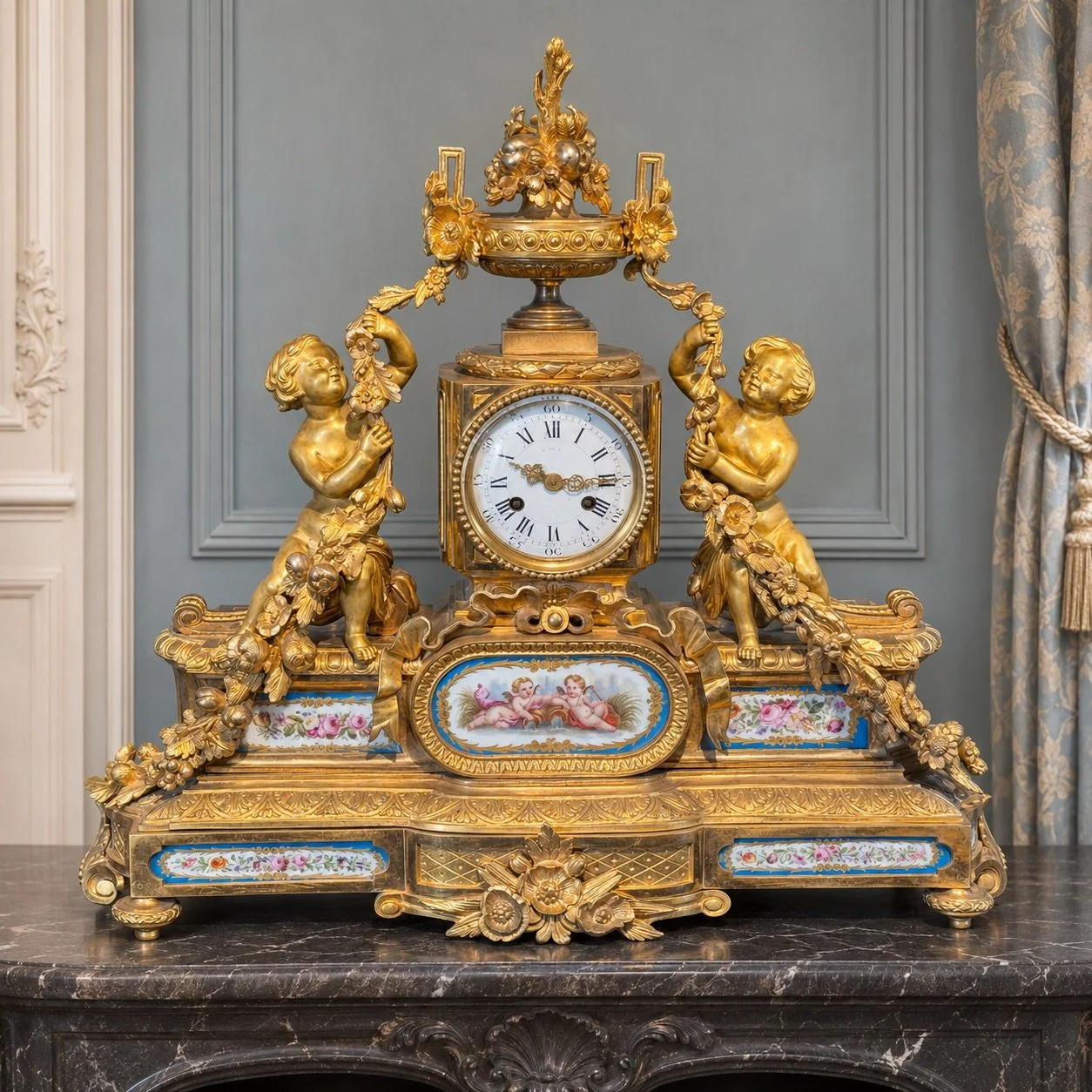 Image 1 of 16
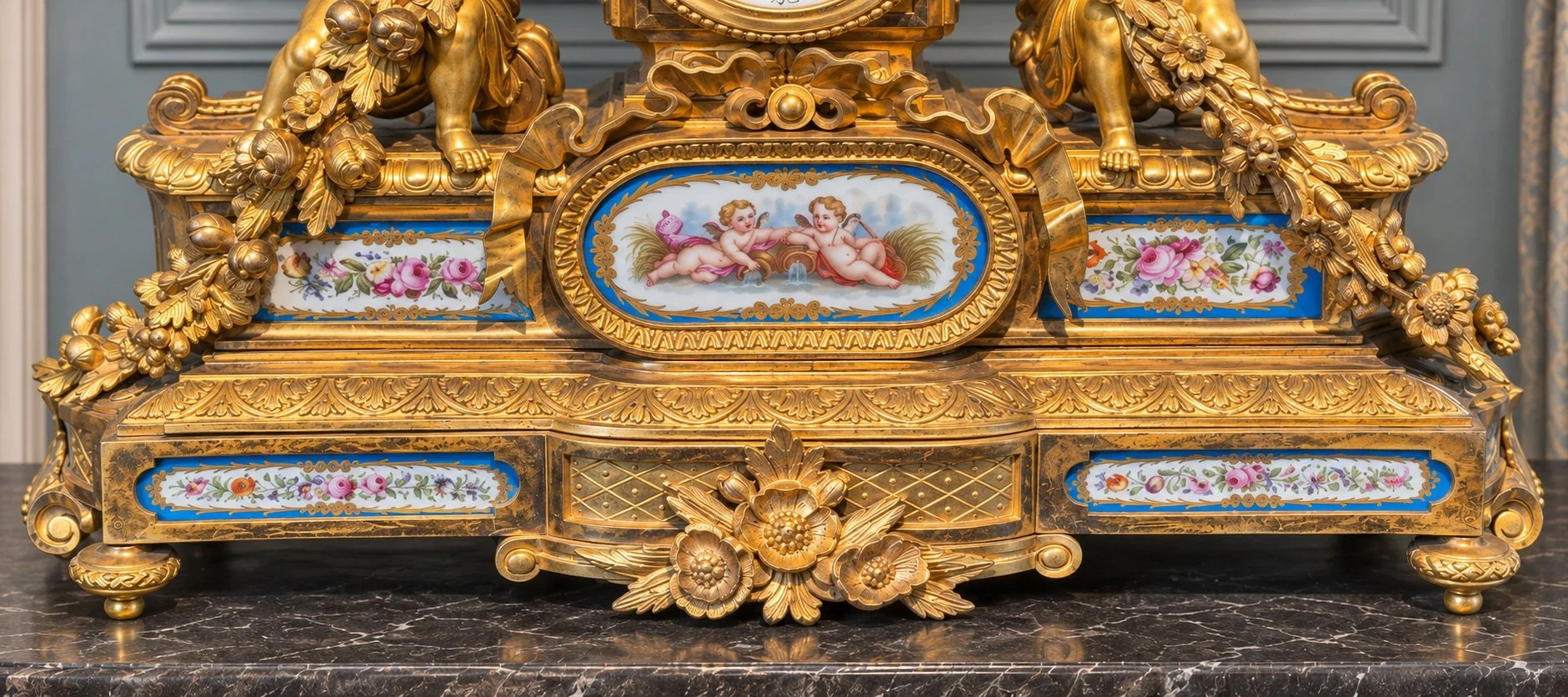 Image 2 of 16
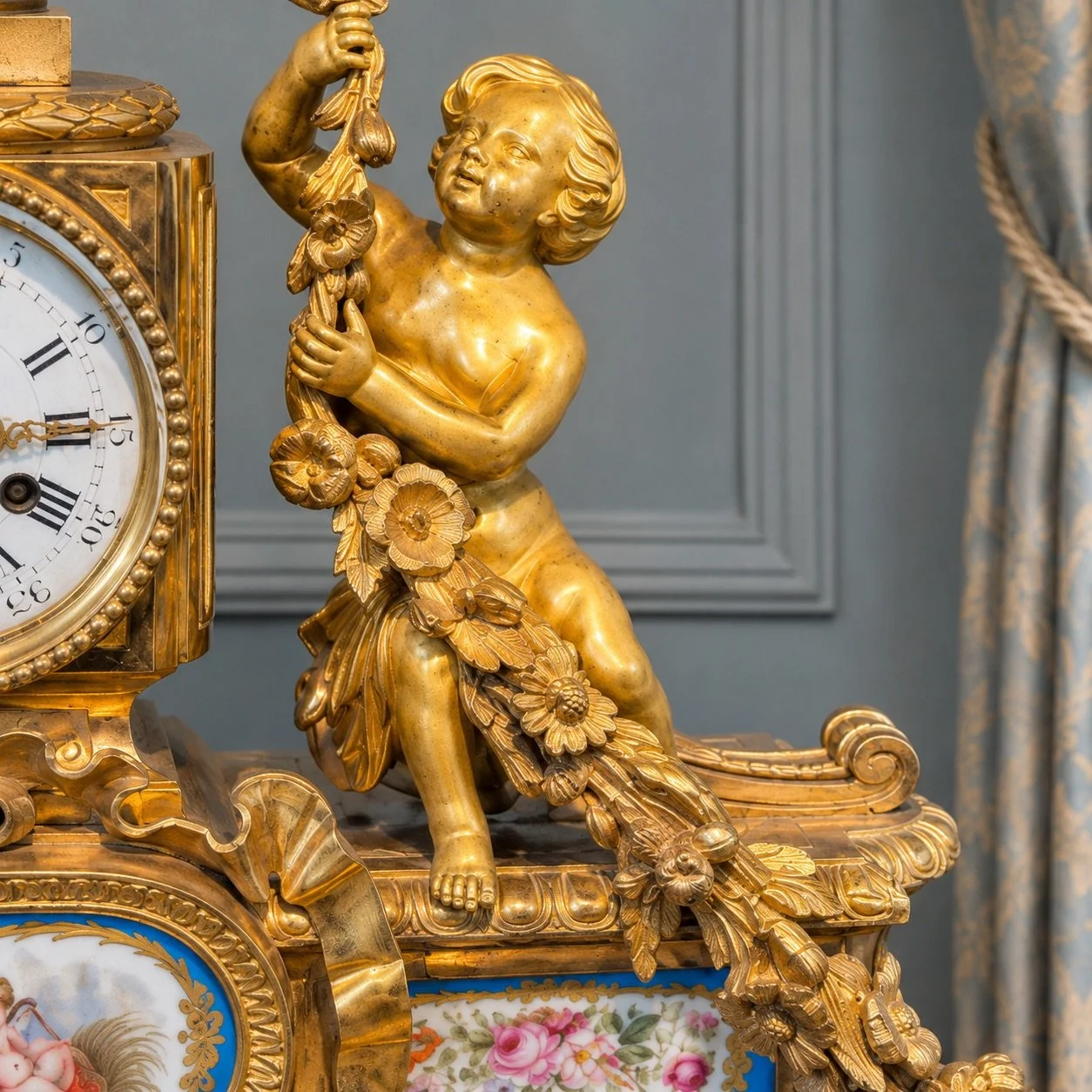 Image 3 of 16
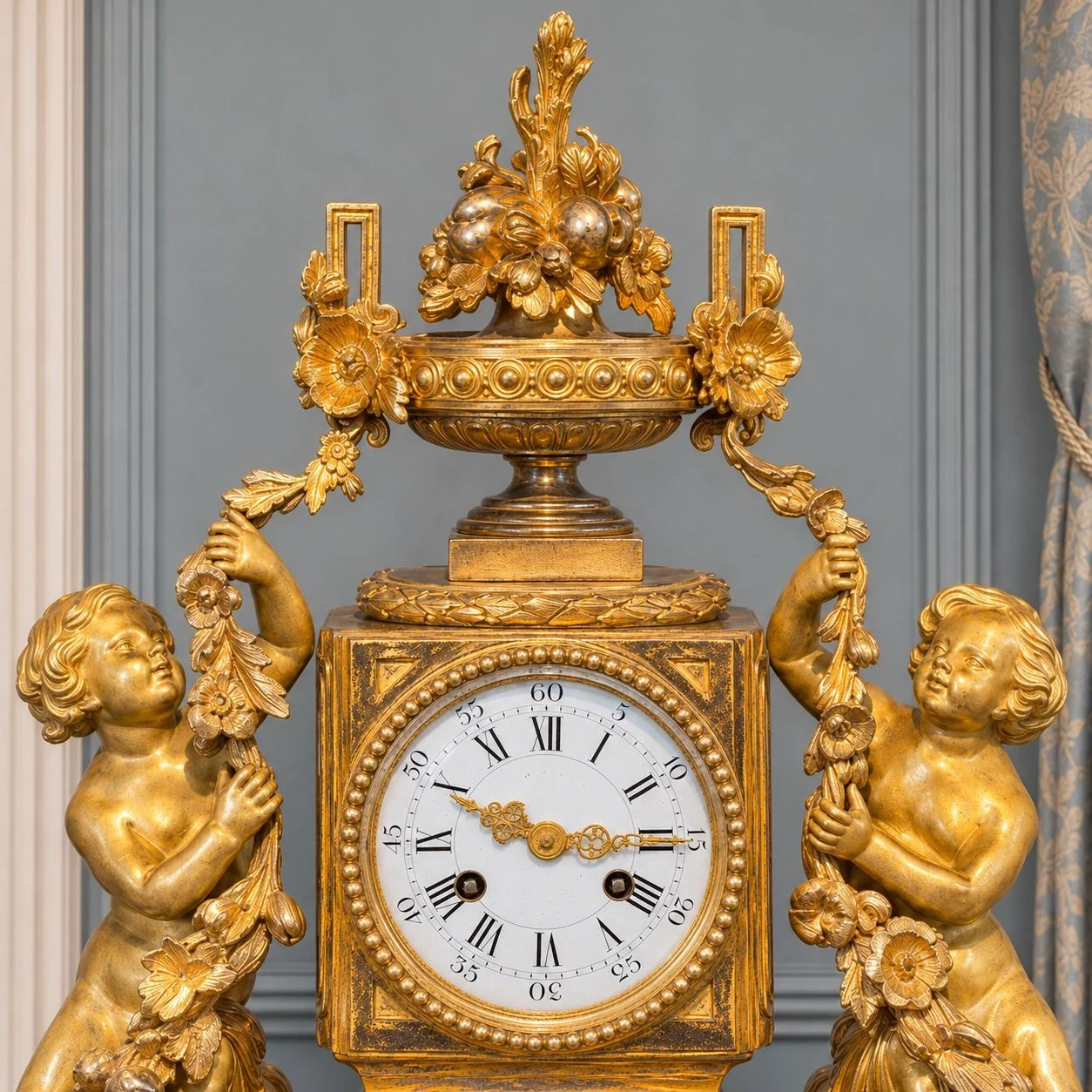 Image 4 of 16
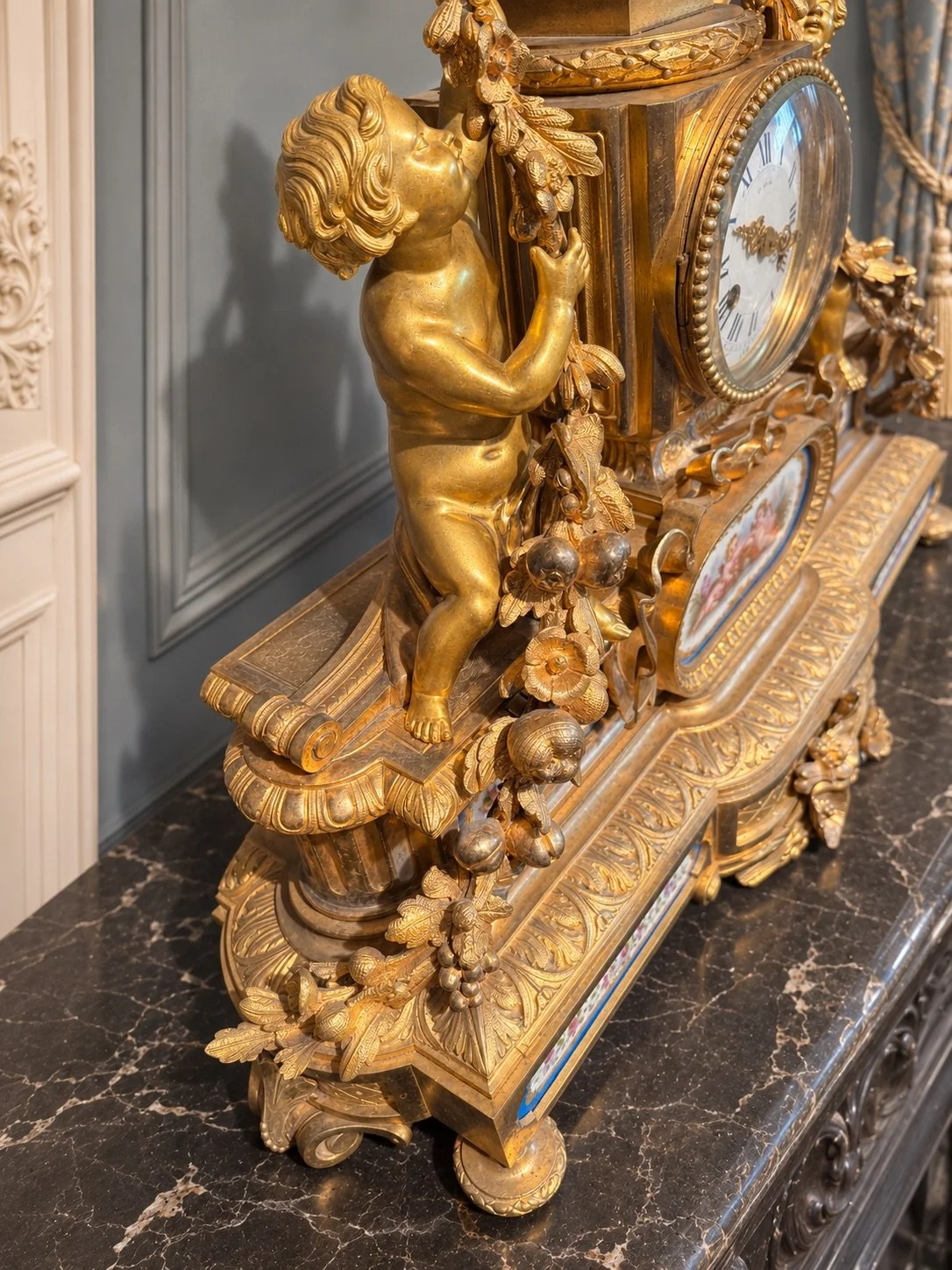 Image 5 of 16
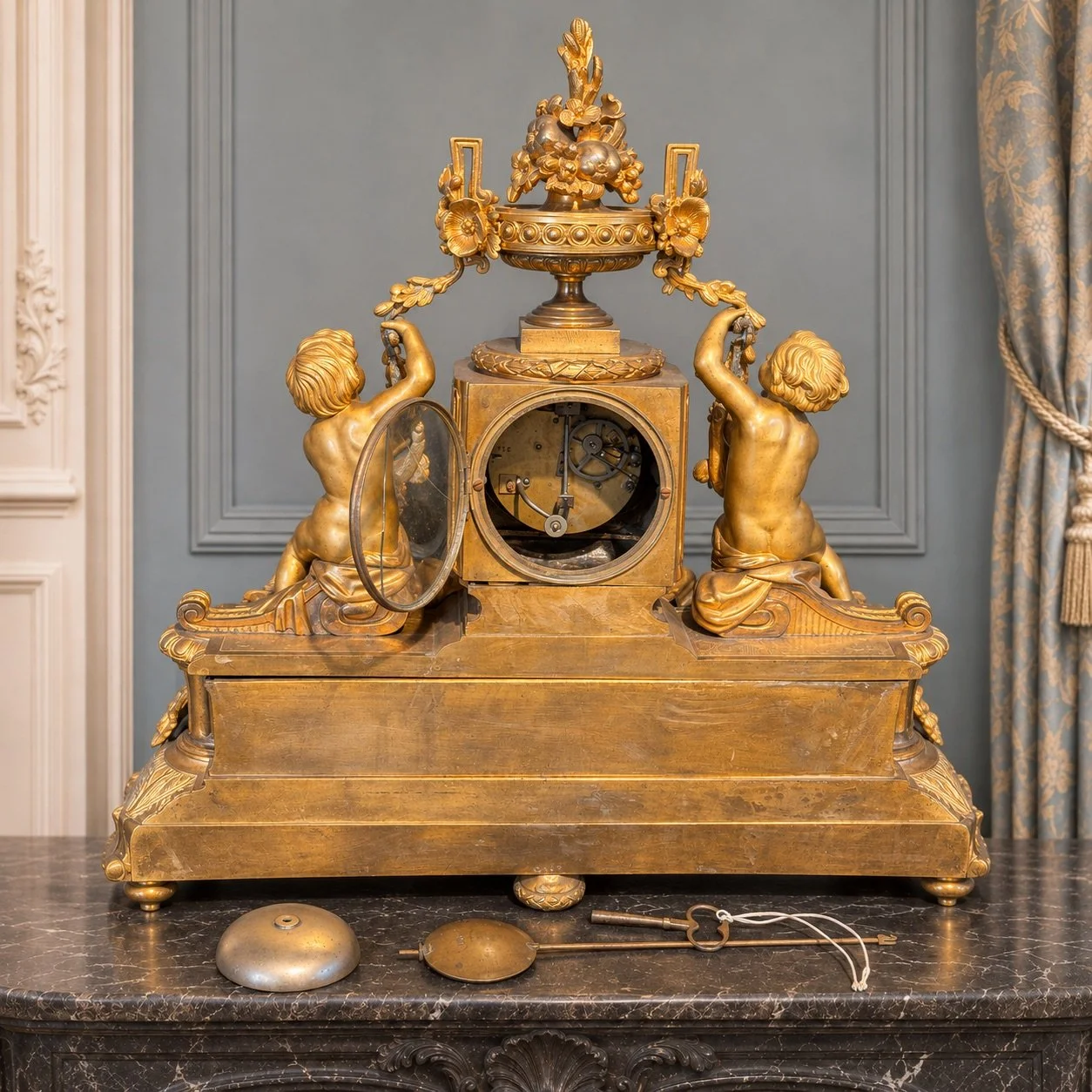 Image 6 of 16
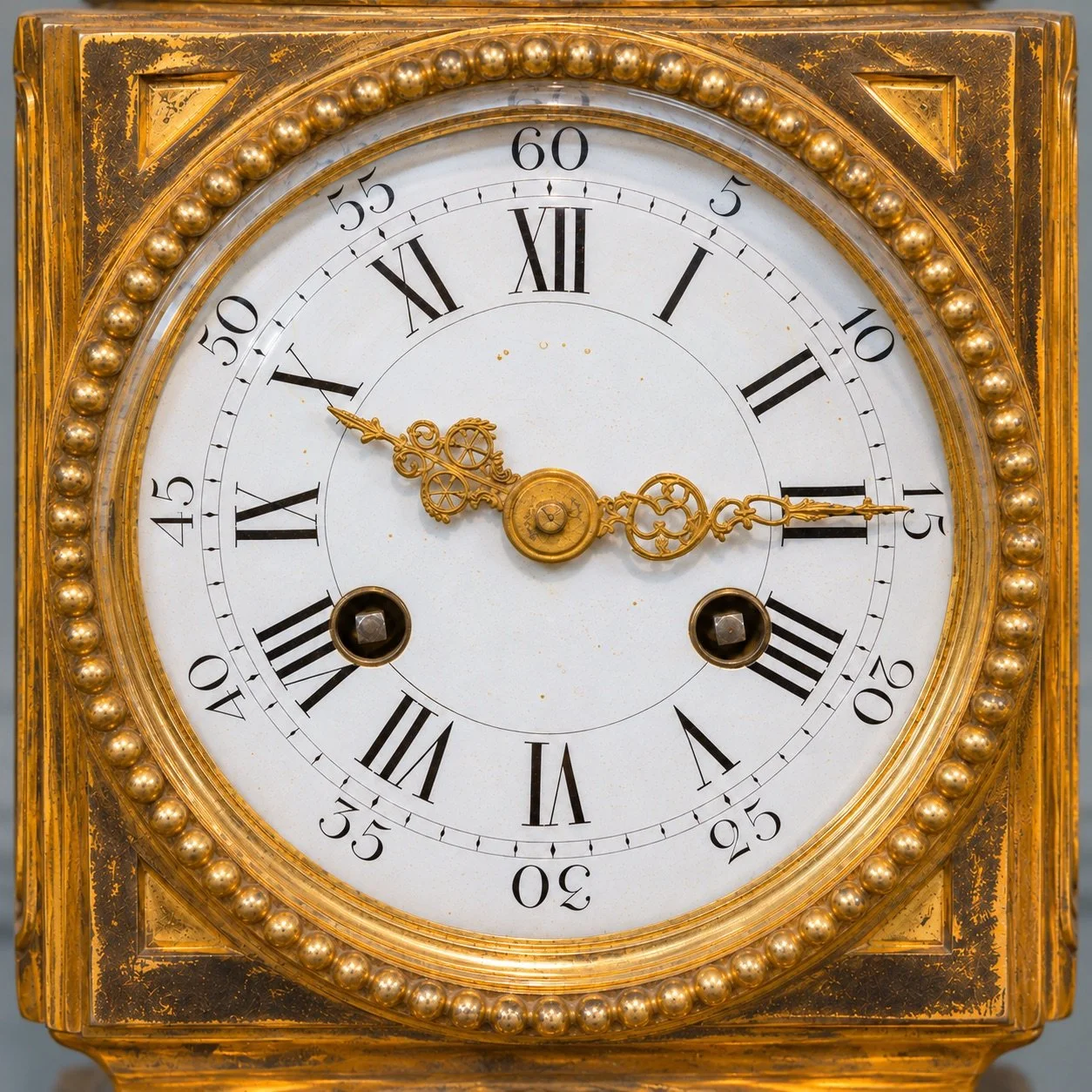 Image 7 of 16
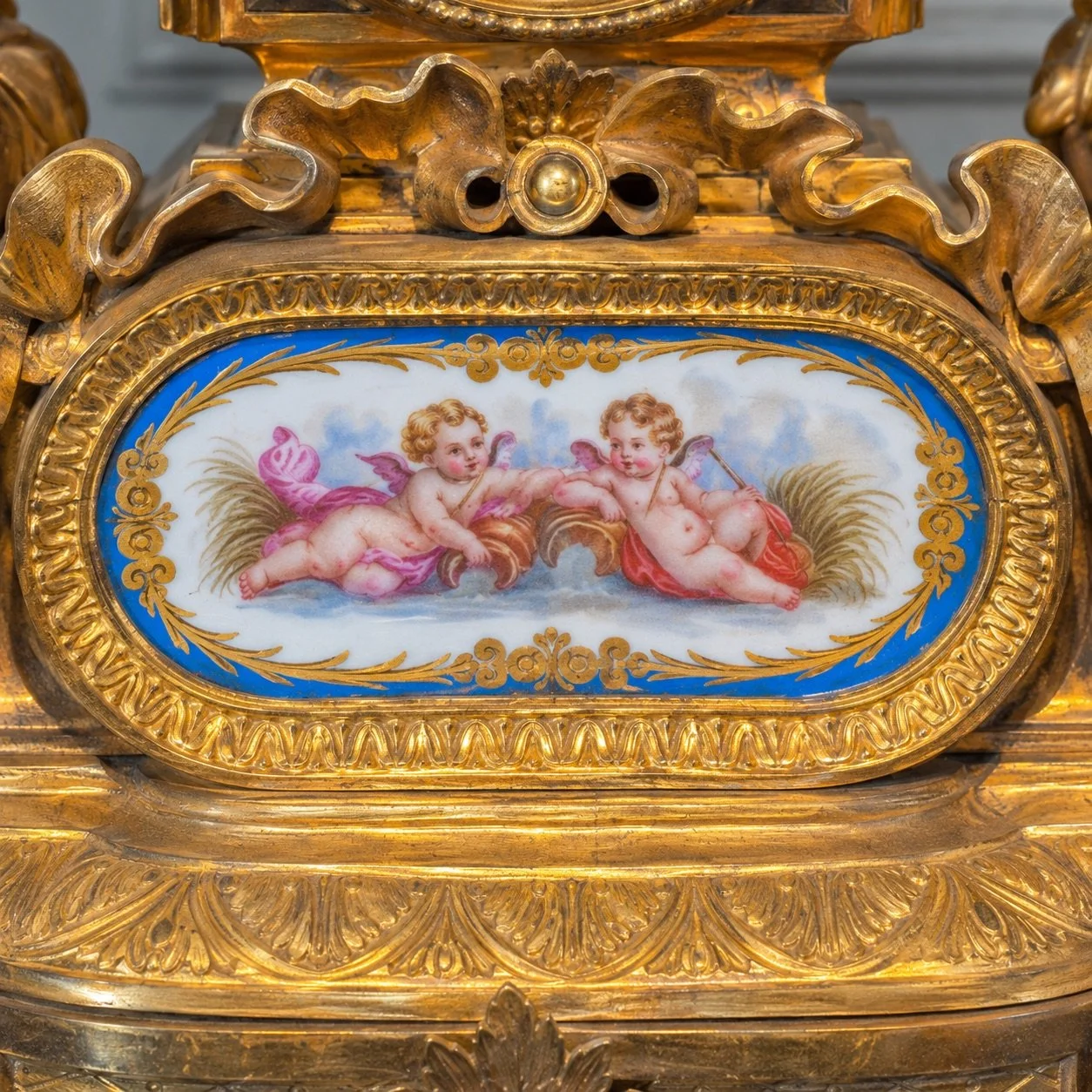 Image 8 of 16
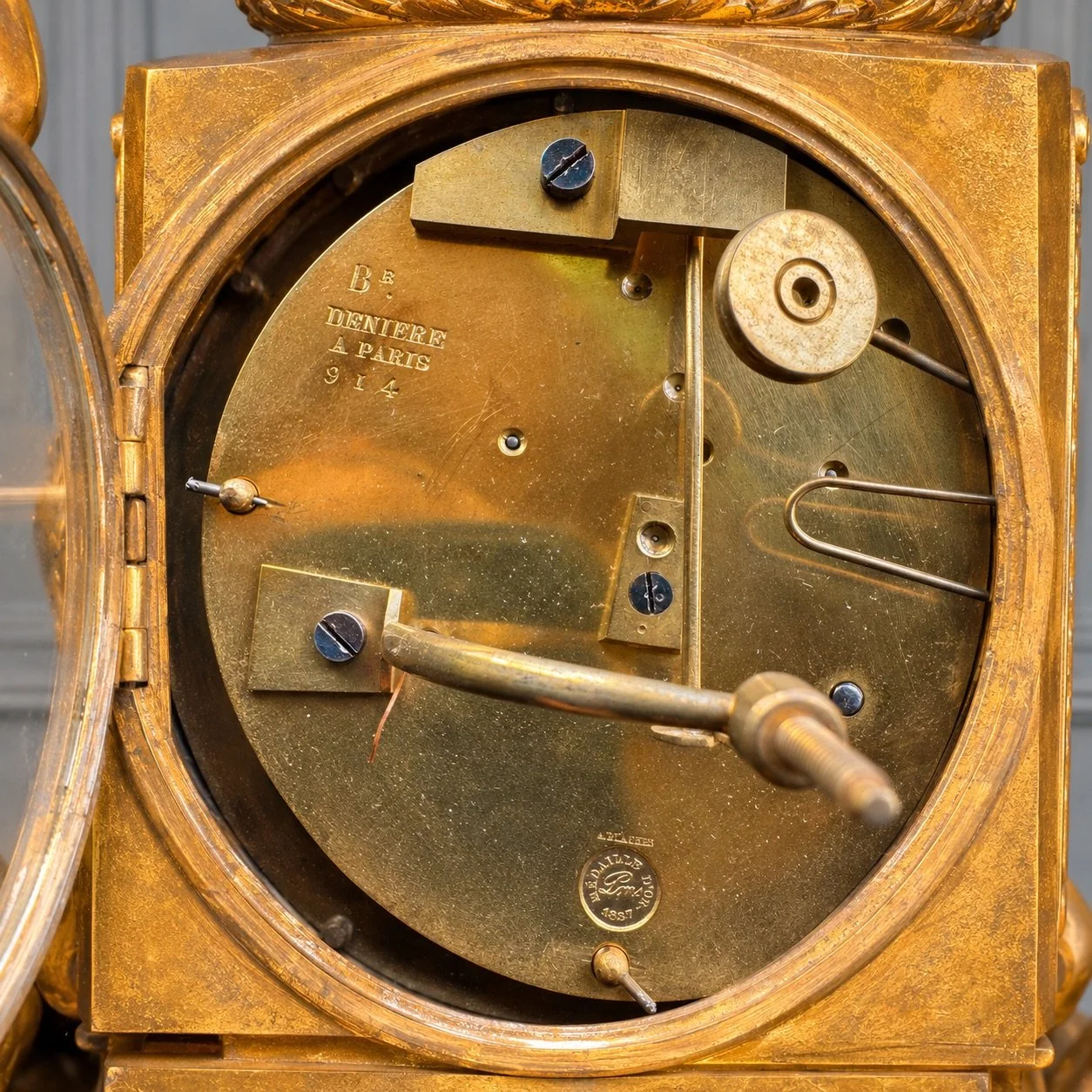 Image 9 of 16
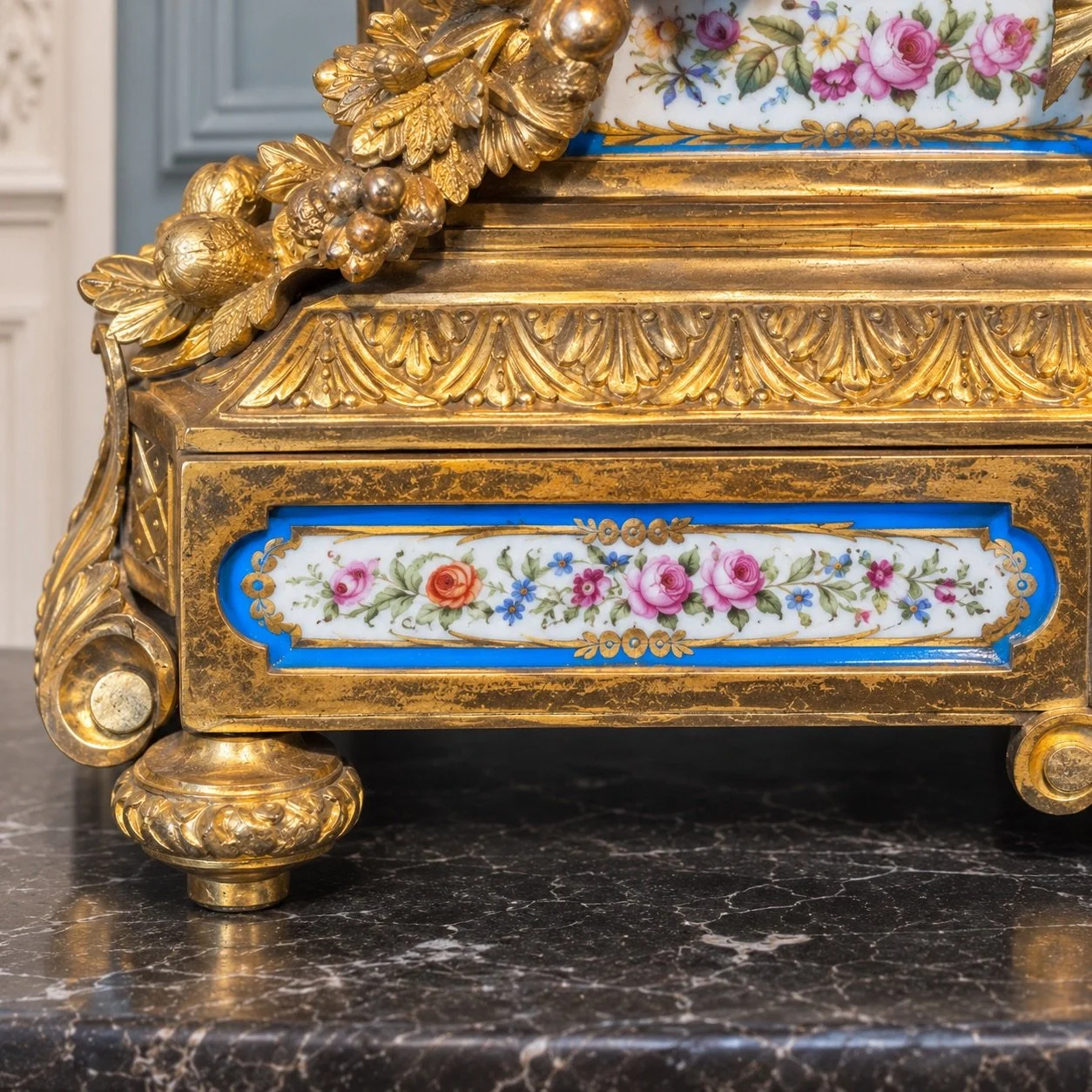 Image 10 of 16
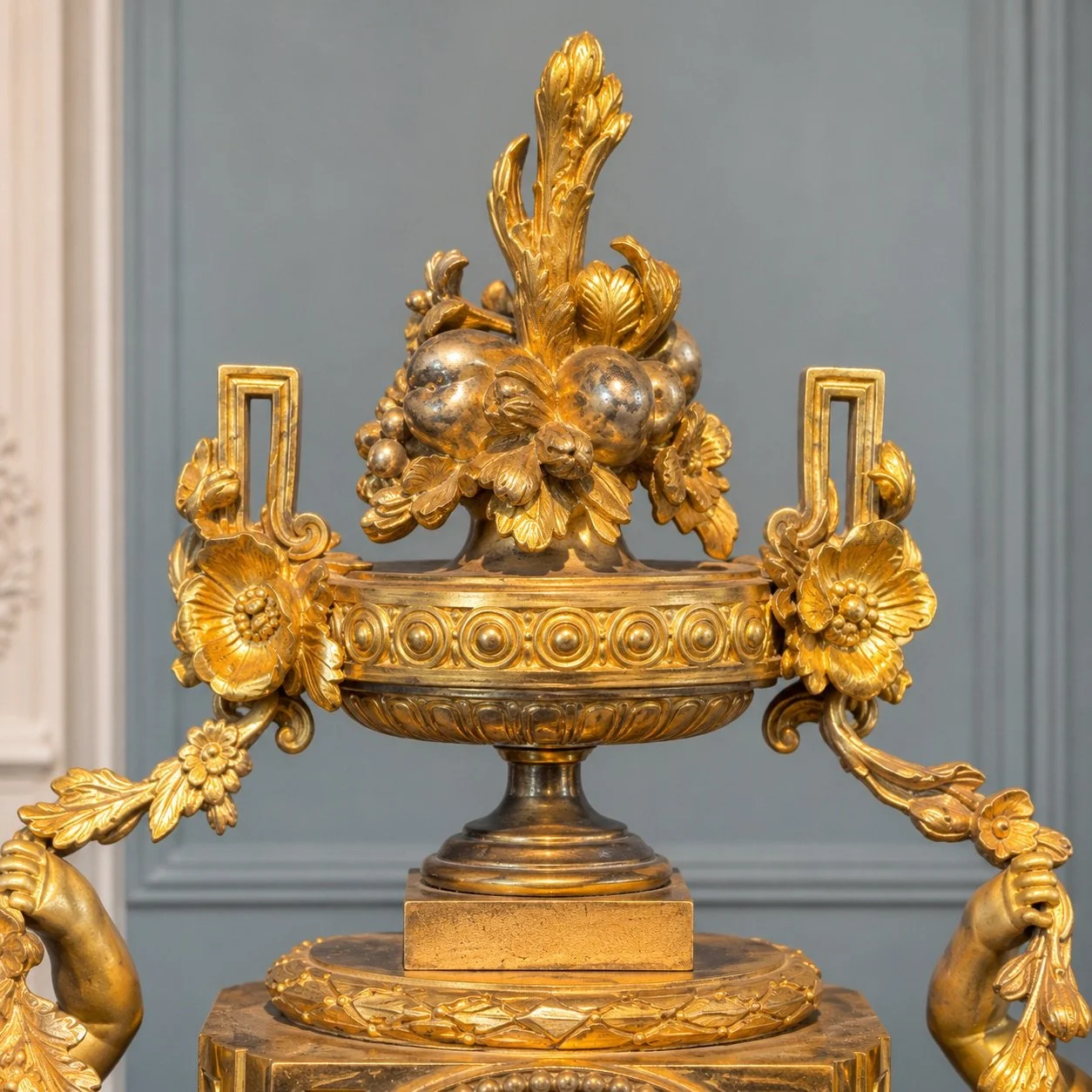 Image 11 of 16
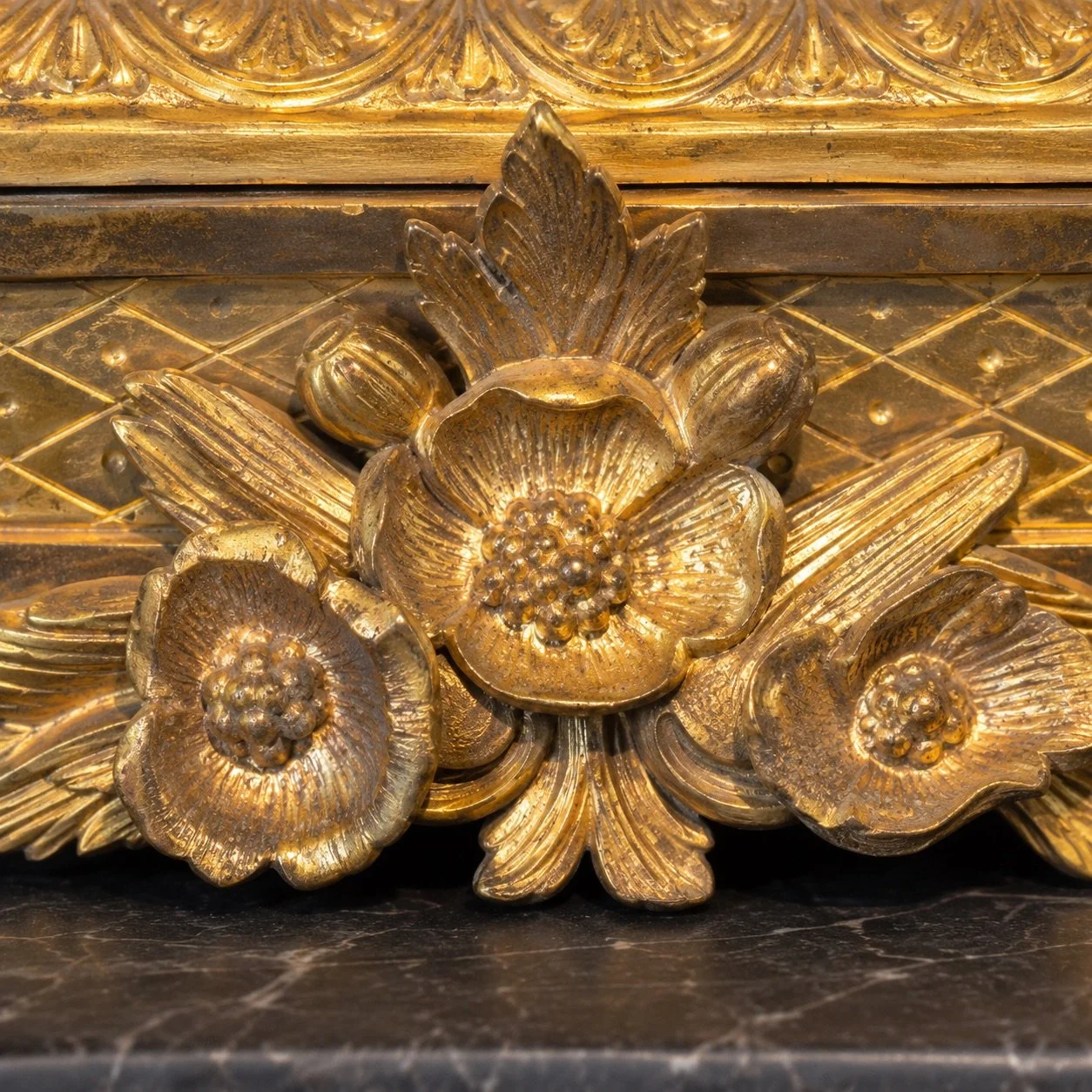 Image 12 of 16
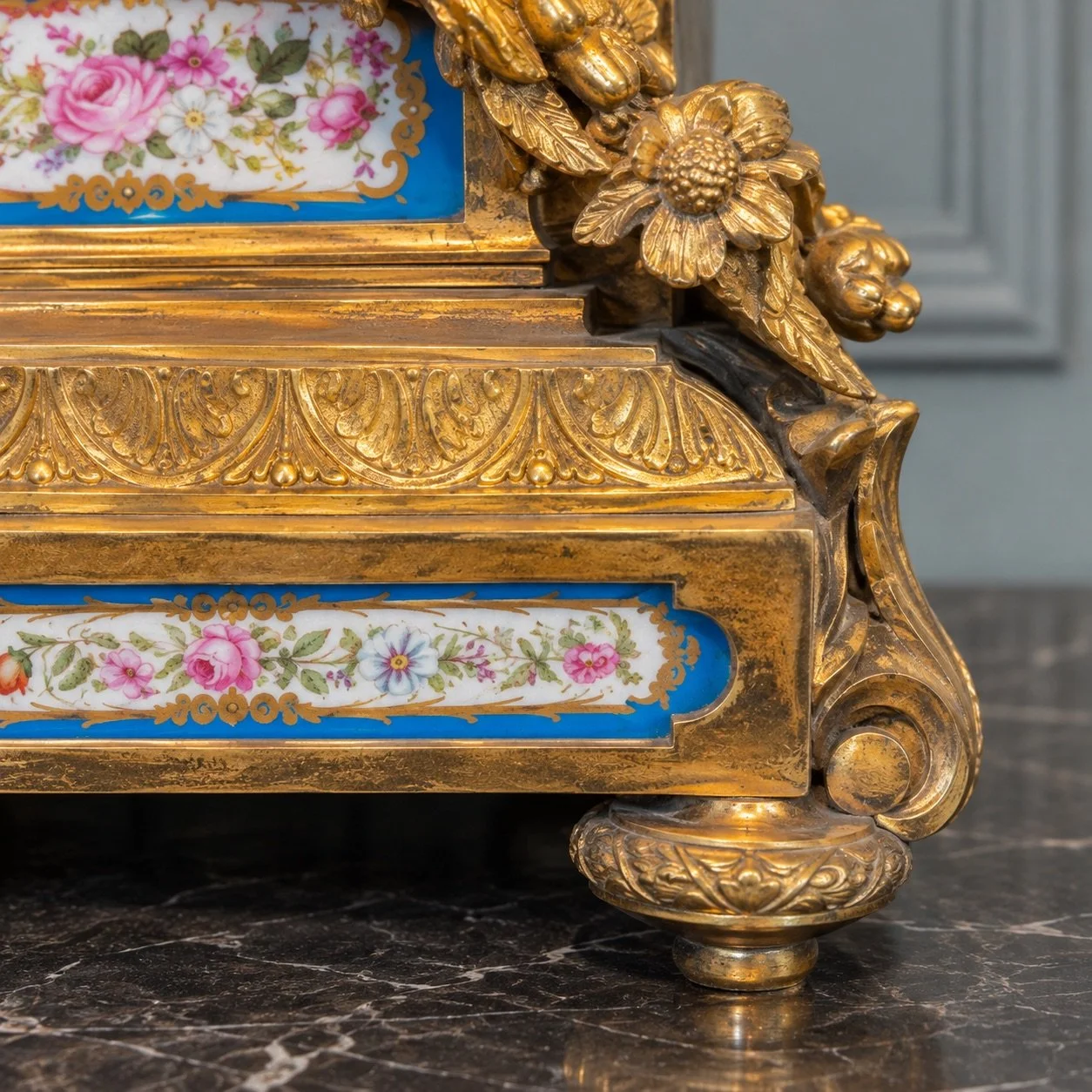 Image 13 of 16
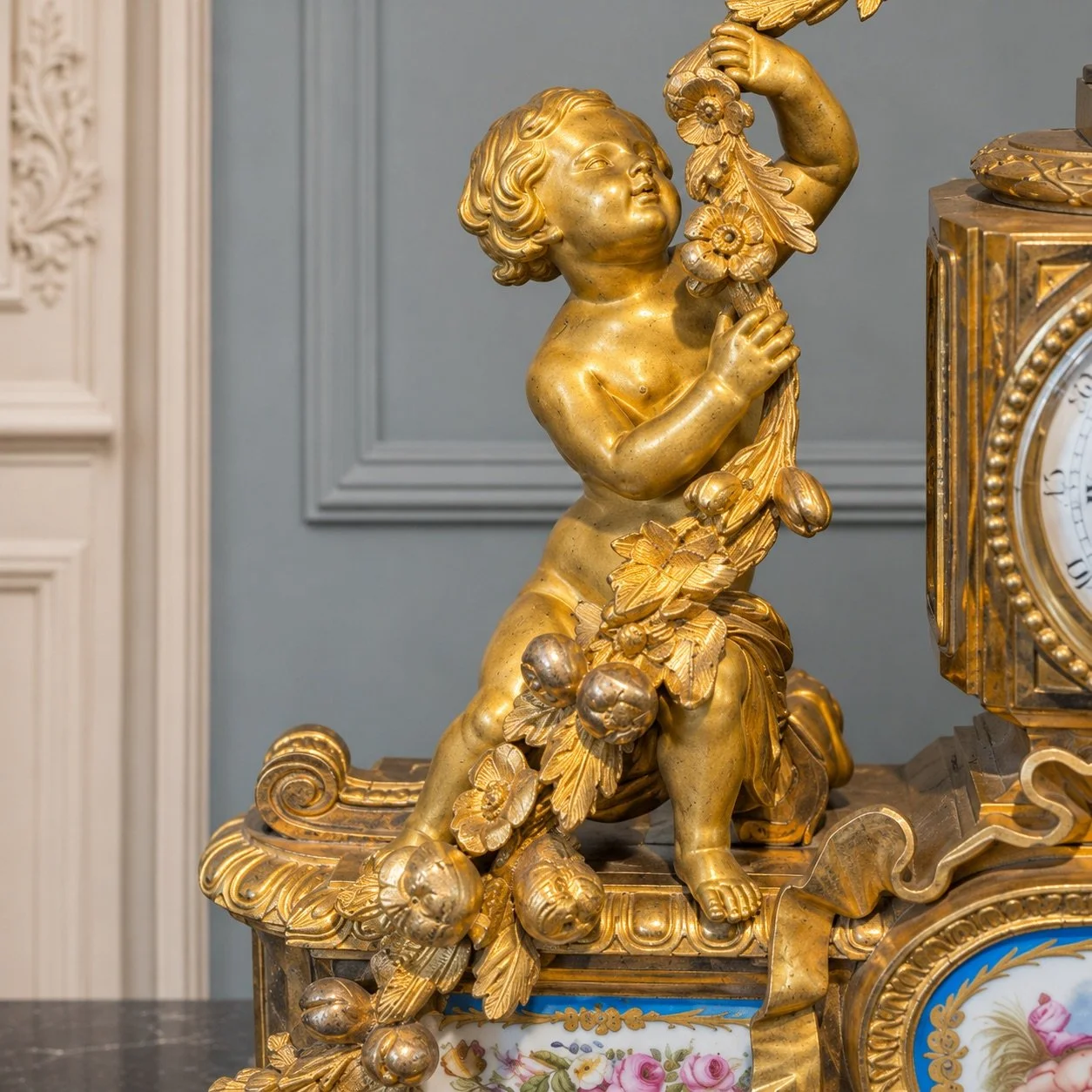 Image 14 of 16
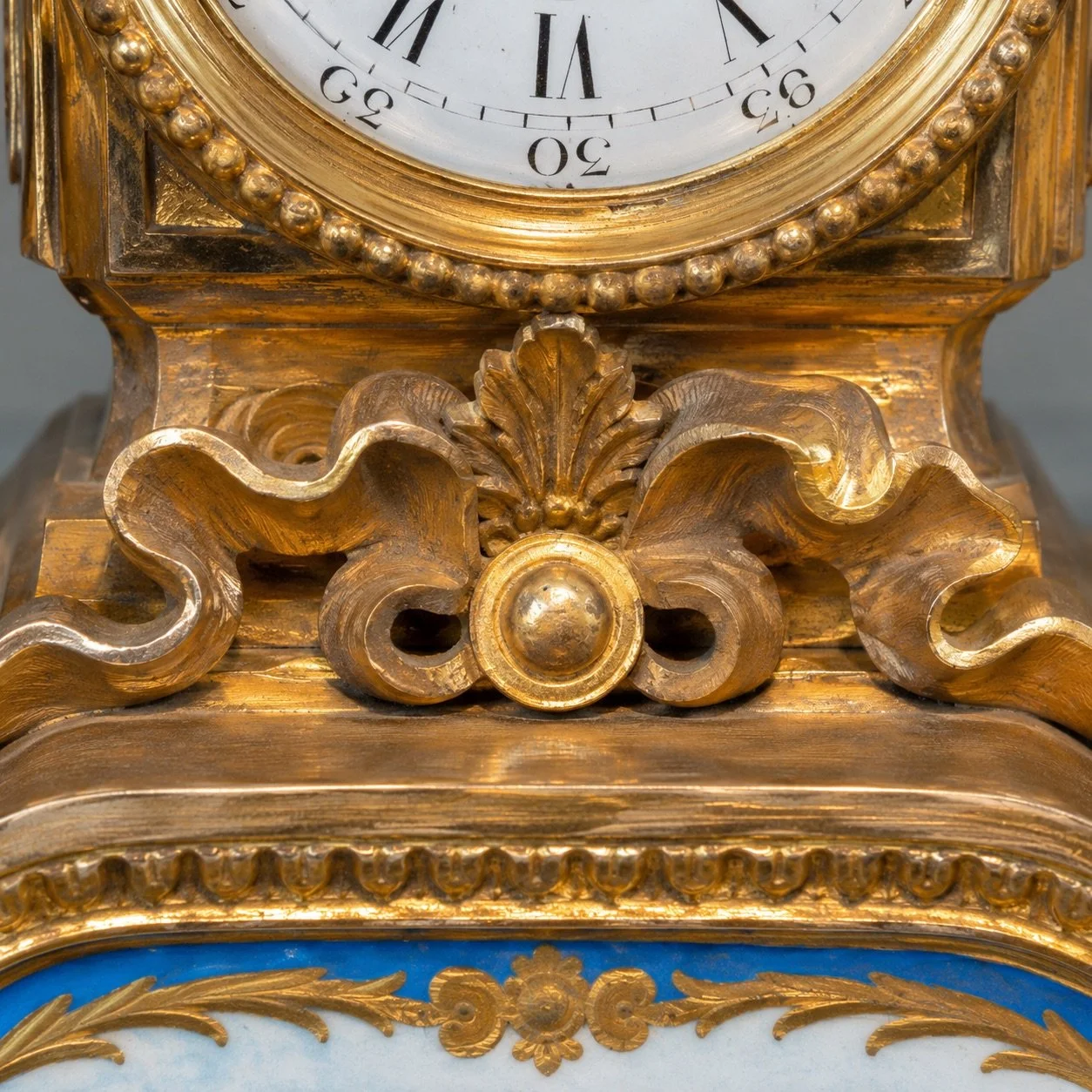 Image 15 of 16
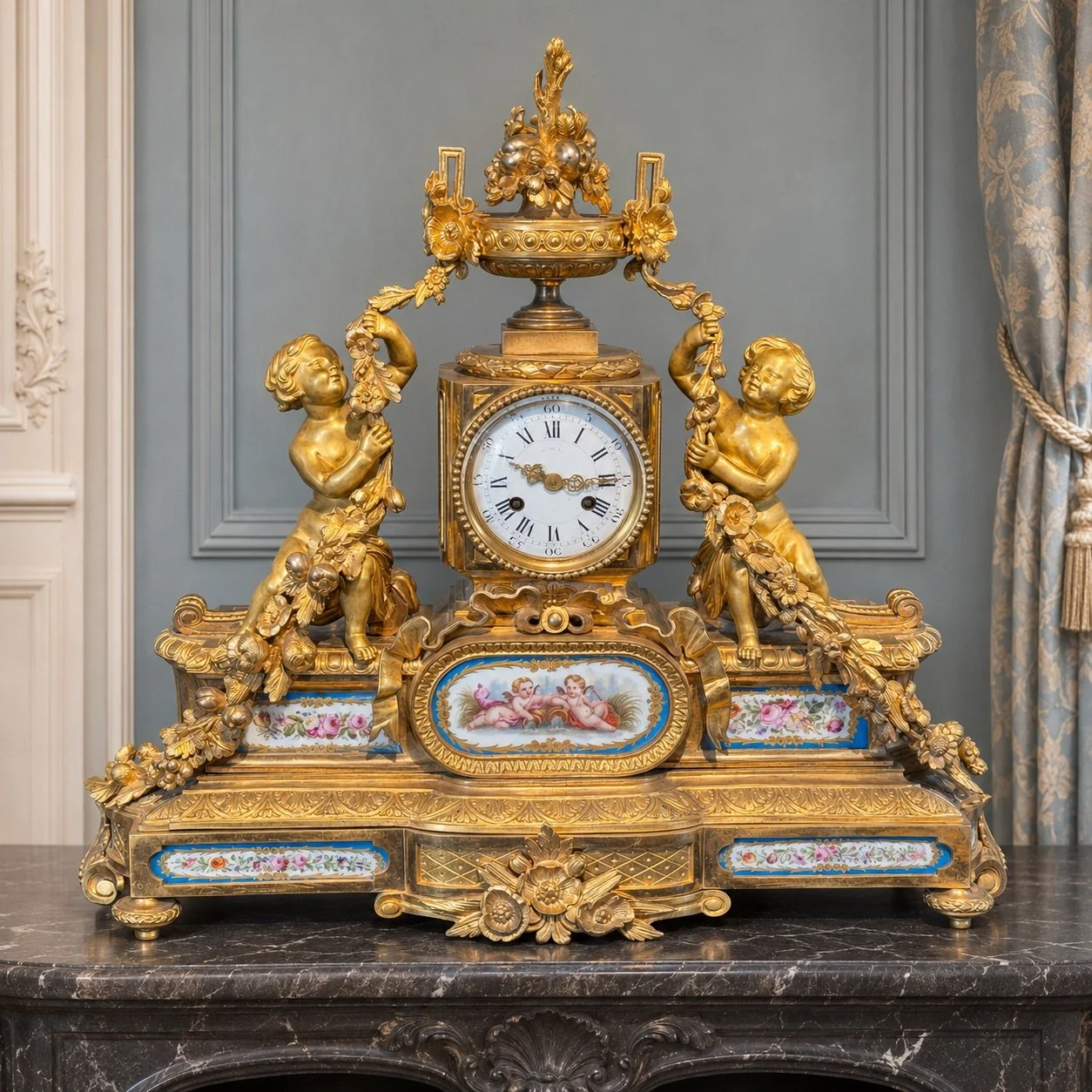 Image 16 of 16


